Why Virginia Beach Has a Mosquito Problem Unlike the Rest of Virginia
For people in Richmond or Roanoke, mosquitoes are usually a summer annoyance. However, Virginia Beach residents have to tackle mosquitoes most evenings from June through September. This means giving up on yard time, keeping the cookouts short, and shutting down the windows and doors to block mosquitoes from coming in.
This vast difference is not about perception. It’s the geography of Virginia Beach that makes it a mosquito-friendly place on the East Coast. No two areas have the same mosquito problem. Thus, knowing what makes your area so attractive to mosquitoes is always the first step towards effective mosquito control.
To know how treatment works, our mosquito control Virginia Beach guide answers the common queries.
In this blog, we are going to dig into why Virginia Beach has a mosquito infestation problem like no other place.
So, what makes Virginia Beach mosquitoes unique, and why is the infestation so severe?
Virginia Beach’s topography is a combination of salt marshes, flat, low-lying land, and freshwater wetlands. Here, year-round flooding and waterlogging issues are a common occurrence. And on top of that, a long, humid, warm season makes the conditions all favorable for mosquitoes to breed. But this is not the only issue. The mosquito profile of this area is also unique. Here, several mosquito species breed and thrive at once, including rainwater-breeding and saltwater-breeding species.
A city built on water
Look at a map of the city. Back Bay and the Currituck Sound to the south. The Lynnhaven River and its many inlets cutting through the middle. The Chesapeake Bay to the north. The Elizabeth River system just over the line in Norfolk and Chesapeake, and the edge of the Great Dismal Swamp region to the south and west.
Water isn’t a feature of the landscape here. It is the landscape. A huge share of residential neighborhoods sit on or near tidal creeks, retention ponds, drainage ditches, or low ground that was once marsh. Every one of those is a potential breeding zone.
Elevation makes it worse. Much of Hampton Roads is only a few feet above sea level. Water doesn’t run off quickly. It sits, and sitting water is all a mosquito needs.
Two different mosquito problems at once
This is the part most homeowners don’t realize. Virginia Beach doesn’t have one mosquito problem. It has two overlapping ones.
The saltmarsh problem. Saltmarsh mosquitoes breed in brackish and tidal water, including marsh pools that fill when high tides or storm surge push water into low areas. These are aggressive biters, and they can travel a long way from where they hatch. Folks in neighborhoods near Back Bay, the Lynnhaven, or tidal creeks often see them show up in waves after a high tide or a coastal storm, even when their own yard is spotless.
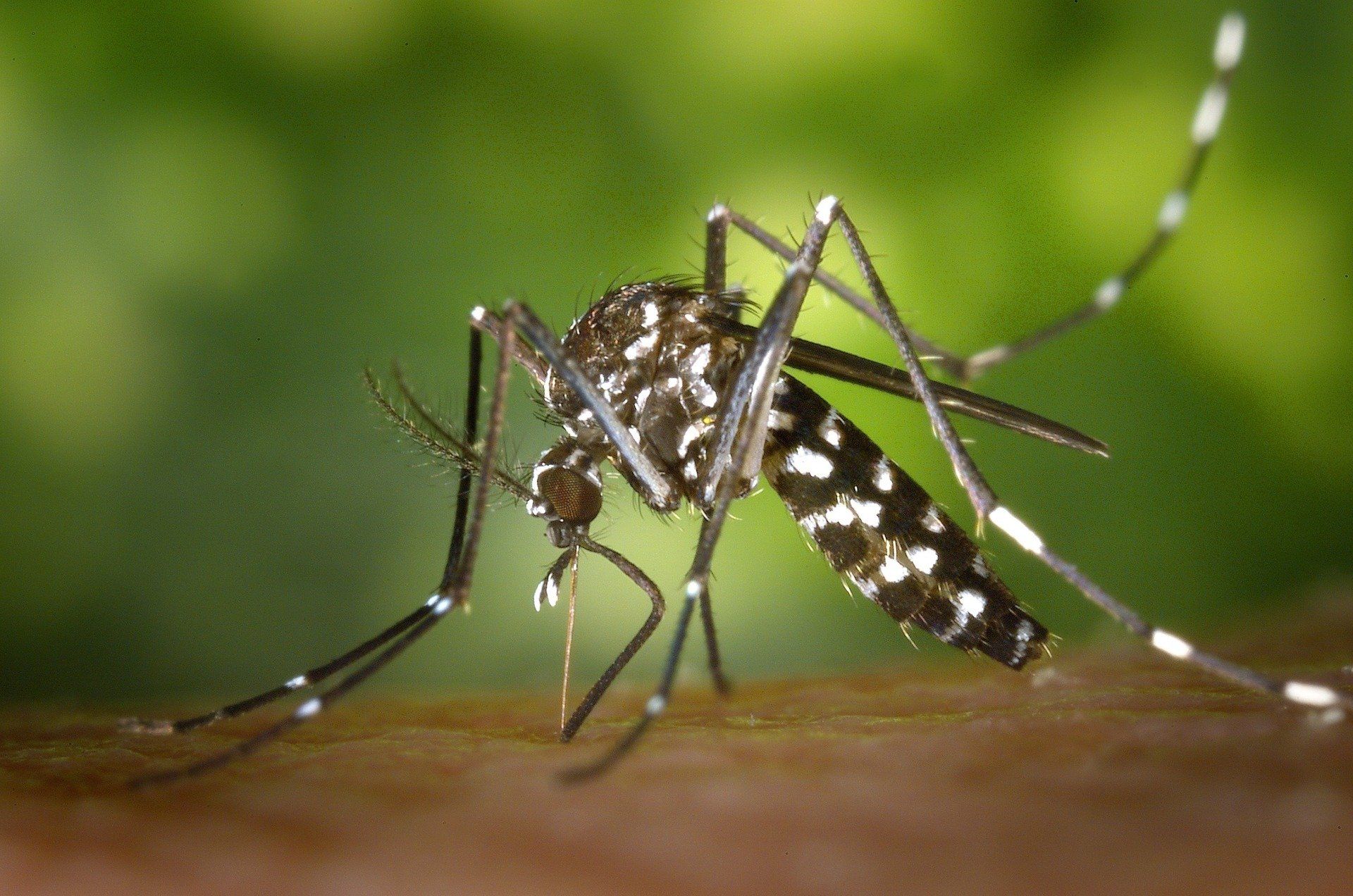
The backyard problem. Then there are the container breeders, mainly the Asian tiger mosquito and the common house mosquito. These live and breed right at your home, in gutters, plant saucers, buckets, birdbaths, corrugated drain pipes, and tarps. The Asian tiger mosquito bites during the day and rarely strays far from where it hatched, so if you’re getting bitten at noon, the source is probably on or next to your property.
That means a Virginia Beach yard can have marsh-bred mosquitoes as well as homegrown ones multiplying. Here, a treatment plan that addresses only one breed of mosquito doesn’t work.
How does climate make the mosquito problem worse?
The climatic conditions of any area determine how severe mosquito infestation can be. Here in Hampton Roads, warm and wet conditions are constant throughout the year, making it an ideal place for mosquitoes to breed. The long humid season also speeds up the life cycle of the mosquitoes. This means eggs hatch faster, and larvae mature into new adult mosquitoes at a much faster rate. A breeding site can produce a new generation of mosquitoes in about a week.
Our mild coastal winters help too. Cold snaps rarely last long enough to reset the population, so eggs and protected larvae often wait out the cold and restart as soon as it warms. Mosquito season here starts early in spring and runs well into fall, often right up through October. It’s why a quick spray before a July barbecue doesn’t solve much.
How Flooding Makes Mosquito Control Difficult?
Hampton Roads residents are aware of how things get here when it rains. After all, this region is defined by recurrent flooding. Every flood season, heavy rain, tropical storm remnants, and high tides push water into the streets and yards.
For mosquitoes, flood events are a gift. Some species lay eggs on damp soil above the waterline. The eggs can sit dry for a long time, then hatch all at once when floodwater covers them. That’s why a yard can seem fine for weeks and then fill with mosquitoes two or three days after a big rain.
Mosquito problem across Hampton Roads
- Oceanfront and Resort Area: This region has less marsh, but an abundance of containers, drainage features, and shady landscaping, all ideal for mosquitoes to breed.
- Lynnhaven, Great Neck, and Bayfront areas: Here, tidal creeks and marsh edges bring saltmarsh mosquitoes. That’s double trouble along with backyard breeders.
- Princess Anne, Pungo, and Sandbridge: Due to agricultural ditches, wetlands, and proximity to Back Bay, this region has a persistent mosquito problem.
- Kempsville and Great Bridge (Chesapeake): Dense neighborhoods with retention ponds and wooded lots become home to mosquitoes all through the year.
- Norfolk and Chesapeake near the Elizabeth River: Low ground, tidal influence, and frequent street-level flooding make this Hampton Roads area a favorite amongst the mosquitoes.
A property one block from a retention pond can have a very different mosquito profile from one block away. That’s why a flat, one-size-fits-all approach underperforms here.
Bottom line
The geography of Virginia Beach makes the mosquito problem more persistent than in most other inland areas. It’s not that you’re not dealing with the problem correctly. The climatic conditions and the topography of the land, like salt marshes and consistent flooding, all make it a hotspot for mosquitoes.
If you’re dealing with mosquitoes and want an effective solution, you should invest in a season-long treatment plan. Additionally, adapting simple yard habits can go a long way in helping you keep the mosquitoes under control.
Frequently Asked Questions
What makes Virginia Beach mosquito-friendly?
Virginia Beach has everything needed for mosquitoes to breed and multiply. For example, the city has tidal salt marshes, low-lying lands, retention ponds, wetlands, along with a long humid season. And on top of that, flooding and waterlogging are very common. These create a perfect breeding habitat for mosquitoes.
What mosquito breeds live in Virginia Beach?
The mosquito profile here is a mix of saltmarsh breeders and rainwater breeders. Asian tiger mosquitoes, known as daytime biters, are also very common here along with common house mosquitoes.
When is mosquito season in Virginia Beach?
Mosquitoes start their activity around March or April. During June through September, they are at their peak. If the region is experiencing a milder winter, mosquitoes linger through winter months as well.
Is it possible to get rid of mosquitoes in my Virginia Beach yard on my own?
There are a few measures you can take to prevent mosquitoes from breeding around your property. Things like removing standing water, pruning and trimming vegetation around the house, and growing mosquito-repellent plants can reduce breeding. DIY sprays won’t address mosquitoes migrating from the salt marshes. Thus, effective mosquito control should include a professional program.
How often should I treat for mosquitoes in Virginia Beach?
In Virginia Beach, monthly service from April through October can help you tackle the mosquito population.