Signs You Have a Roach Infestation in Your Home
One roach doesn't always mean much. Three signs in the same week is a different story.
Whether you're dealing with a real roach control near me situation or just a random visitor comes down to pattern more than panic. One late-night sighting could be nothing at all. Droppings showing up, a smell that wasn't there last week, another sighting a few days later, that's the population telling you it's already settled in.
Diamond's full breakdown on roach control virginia beach covers cost and treatment once you've confirmed what's actually going on. This piece is just the signs, so you know what you're looking at first.
Seeing a Roach During the Day Is a Bigger Deal Than It Sounds
Roaches are nocturnal. Not trivia, actually useful. A roach crossing your countertop at noon, lights on, nobody home to scare, usually means the hiding spots are already full.
Roaches don't come out during the day for the view. Overcrowding pushes them into the open. Competition for food and shelter gets tight enough that some get shoved out of hiding. Take that daytime sighting seriously, even if it's the only thing you've noticed so far.
Droppings Are the Detail Most People Miss
Roach droppings look like coffee grounds. Or ground pepper, small and dark, easy to write off as regular dirt unless you actually look close. Check baseboards, behind cabinets, near the stove and sink.
Size tells you something too. Bigger, cylindrical droppings usually mean American roaches. Smaller ones, more like tiny specks, point toward German roaches. Either way, a cluster in one spot means that spot's seeing real traffic, not a random passerby once in a while.
The Smell Is Real, and It's Hard to Mistake
A heavy German roach infestation has its own smell. Musty, a little oily, sometimes described like old stale nuts left in a drawer too long. It's not subtle once you notice it, and it usually concentrates wherever activity is heaviest, a kitchen most of the time, or a cabinet nobody's opened in a while.
Room smells a little off with no clear reason? Pair that with a sighting or some droppings and you've got something stronger than any one clue by itself.
Egg Casings Are Easy to Walk Right Past
Roach egg cases, oothecae if you want the technical name, are small, dark, capsule-shaped things tucked into cracks, behind appliances, under sinks. Places nobody checks on a normal Tuesday. A German roach case runs about a quarter inch. American roach cases run a bit bigger, more rounded.
An empty case means roaches already hatched nearby. A few of them means the population's had real time to settle in and breed, which changes how urgently treatment needs to happen.
Shed Skin Shows Up More Than People Expect
Roaches molt on the way to adulthood, several times, shedding a thin pale shell each round. These fragments look almost ghostly, roach-shaped but hollow, light colored, and they tend to turn up in the same tight spots as droppings and egg cases.
Find shed skin alongside other signs and that confirms it. Roaches aren't just passing through anymore. They've been there long enough to grow.
A single shed skin fragment on its own isn't much to go on, admittedly. Under a fridge, tucked into a drawer track, these things blend in easily and most homeowners never think to look for them specifically. Finding two or three in the same general area, especially near where droppings have also turned up, is a much stronger signal than any single piece of evidence alone.
Where These Signs Tend to Cluster First
Kitchens top the list, easily. The area around the stove, behind the fridge, under the sink where a slow drip might be feeding the moisture problem. Bathrooms come second, especially around drains and under vanities where warmth and humidity both stay high year-round.
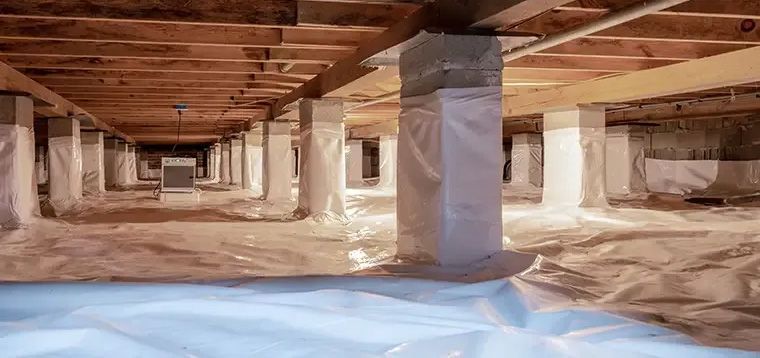
Crawlspaces deserve a mention too, mostly because nobody thinks to check them. A crawlspace with excess moisture, or a gap letting outside air in, can turn into a staging ground roaches use before pushing further into the house. Signs keep coming back in the kitchen even after a good cleaning? Check the crawlspace next.
A Few Homes See These Signs Faster Than Others
Older homes with more gaps around pipes, vents, and foundation cracks tend to show signs sooner. More ways means more opportunity. Homes near wooded lots, or with mulch piled close to the foundation, see more American roach activity specifically, since that's their natural territory right up to the property line.
A kitchen that goes a few days between deep cleans, even in an otherwise tidy house, gives German roaches just enough of a food source to keep a small population going quietly for a while. None of this is about blame. Some houses just hit that three-sign threshold faster than others.
What Counts as a Confirmed Infestation vs. a One-Off
| Sign | One-Off Visitor | Likely Infestation |
|---|---|---|
| Daytime sighting | Rare, single occurrence | Repeated over days/weeks |
| Droppings | None found | Clustered in one or more spots |
| Odor | Not present | Noticeable, especially in one area |
| Egg casings | None found | One or more found |
| Shed skin | None found | Present near other signs |
One or two boxes checked, keep watching. Three or more, stop watching and call someone.
What to Do Once You've Confirmed the Signs
Skip the fogger. Bug bombs kill whatever they directly touch and barely reach roaches hiding deep in wall voids or cracks. They can actually scatter a colony further into the house instead of fixing anything.
Better first move: document what you found. A quick photo of droppings, an egg casing, the roach itself, all of it helps a technician confirm the species and scope before ever stepping into your home. Knowing whether American or German roaches are driving the activity changes the entire approach, interior baiting for one, exterior sealing for the other.
From there, a roach exterminator runs a full inspection. Kitchens, bathrooms, crawlspaces, entry points, all checked to map out where activity's actually concentrated. That inspection turns "I think I have a problem" into a real treatment plan instead of a guess.
Don't Wait for It to Get Worse
German roaches breed fast. One egg case holds 30 to 40 nymphs, and a single female can produce several across her lifetime. A small, manageable problem in week one can turn into a wall-void colony by month three if nothing changes in between.
Waiting costs more too, almost always. A single treatment for an early infestation runs a fraction of what a monthly plan costs once a colony's fully established. Homeowners who search cockroach exterminator virginia beach after weeks of ignoring the signs usually end up paying for a bigger, longer treatment than the one they could've booked at the first sighting.
Checking off multiple signs from the list above? That's your answer already. Time to schedule an inspection instead of watching and hoping it sorts itself out.