Crawl Space Repair vs. Encapsulation: Which Does Your Hampton Roads Home Need?
A homeowner in Kempsville called last spring convinced her whole crawl space needed to be torn out and redone. Turns out it was one section of vapor barrier, torn where a plumber had been a few months earlier, letting ground moisture creep up right under one bathroom. A patch and reseal fixed it in an afternoon, nowhere close to the full job she was bracing for.
That mix-up happens a lot. Homeowners searching crawl space repair virginia beach often assume the worst before an inspector even looks at the space, and honestly, it's an easy assumption to make when you're standing over a musty smell with no idea what's actually causing it. Sometimes the fix really is small. Sometimes it isn't. The only way to know for sure is figuring out which situation you're actually in.
For the bigger picture on what full encapsulation involves and what it costs across the region, crawl space encapsulation virginia beach breaks down pricing, process, and how Hampton Roads' geography makes this more of an ongoing issue here than in drier parts of the country.
When a Repair Is Actually Enough
Not all issues in crawl spaces have to be treated with the whole treatment package. The repair itself may involve things such as a damaged vapor barrier, moisture penetration into a restricted area following some occurrence, insulation that is damaged at one specific spot, or the need to reseal a vent. Such issues are isolated ones, and their origin can be traced back to a single cause, and not moisture throughout the system.
The above case involving Kempsville is fairly common. Plumbing or electrical work done in the crawlspace normally involves moving or damaging the vapor barrier, and should the sealing be ignored, then that small gap becomes the pathway through which the moisture comes in.
Signs You're Probably Looking at a Repair, Not a Full Job
A few patterns usually point toward repair rather than encapsulation:
- Moisture or mold limited to one section of the crawl space, not spread throughout
- A recent event you can point to, like plumbing work, a storm, or a specific leak
- Vapor barrier that's mostly intact with one clear tear or gap
- No structural signs like sagging floors or widespread wood damage
If most of these apply, there's a decent chance the fix is smaller and cheaper than a full encapsulation would be.
When It's Time for Full Encapsulation
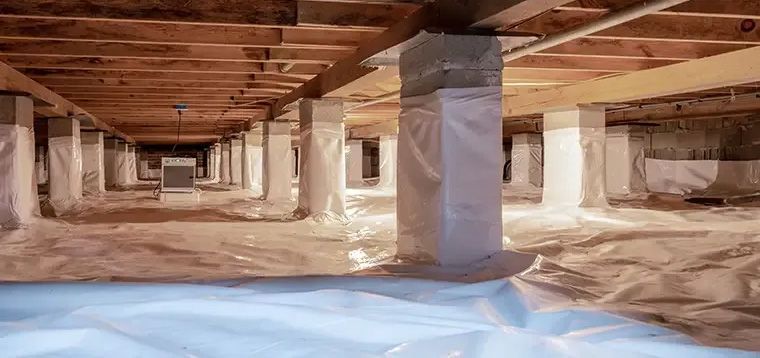
Encapsulation is more applicable if the problem is not isolated to one area. For example, mold growth throughout the joists and subfloor, standing water that occurs every time there is rain, high levels of humidity that persist throughout the whole house, and a vapor barrier that is old, thin, and even absent at times, are all symptoms that call for an encapsulation solution.
In addition, houses that have not had any moisture protection installed in them before are also in need of this approach. There are no systems to be fixed since none were ever put in place, and therefore the installation of a full system from scratch would seem to make more sense.
Signs Pointing Toward Full Encapsulation
- Mold or mildew spread across multiple areas rather than one section
- Standing water that returns after normal rainfall, not just major storms
- Musty smell noticeable throughout the house, not just near one room
- No existing vapor barrier, or one that's decades old and deteriorating
- Sagging floors or soft spots suggesting sustained moisture damage over time
What Repair Actually Costs Versus Encapsulation
Repair pricing runs quite a bit lower than full encapsulation, generally in the hundreds to low thousands depending on the scope of the fix, versus the thousands typical for a complete system. That gap is exactly why an accurate diagnosis matters. Paying for a partial fix on a widespread problem just delays the real cost, and going all in on full encapsulation for a single torn barrier section is spending more than the situation actually calls for.
Crawl space companies near me searches often turn up providers quoting wildly different numbers, and a lot of that gap comes down to whether the quote is for a repair or a full system. Getting an apples to apples comparison means being clear about which one a property actually needs before comparing prices.
How Providers Decide Between Repair and Full Encapsulation
The inspection must be conducted for the whole crawl space rather than only the part where the smell or the symptoms can be detected. The extent of damage that exists at present, the state of the current vapor barrier, humidity levels in different spots of the area, and the nature of moisture sources will all be analyzed.
That is important since the appearance of the symptoms in one part of the house does not guarantee the existence of the source of the problem there. Moisture and humid air circulate in the crawl space, and the appearance of the smell near the kitchen does not necessarily indicate the presence of the source there.
A Detail Worth Knowing
Here's something that catches homeowners off guard: a crawlspace encapsulation near me search sometimes gets recommended even for what looks like an isolated problem, and it's not always upselling. If a home's original vapor barrier is old enough, patching one visible tear while leaving decades old material everywhere else often just delays a bigger job by a year or two, since the rest of the barrier is close to failing anyway.
A good inspector will usually flag this directly rather than just quoting the cheapest immediate fix, since a repair that needs redoing again soon isn't actually the more affordable option once it's factored in.
What a Hampton Roads Inspection Actually Looks At
The technicians move throughout the entire crawlspace area to check for several items: the quality and coverage of any current barrier, moisture testing at various locations instead of one single spot, evidence of mold or wood damage, vent condition, and evidence of pest infestation.
From there, the recommendation gets built around what's actually found rather than a standard package applied regardless of condition. A home with one damaged section and an otherwise solid barrier gets a repair recommendation. A home with a barrier that's failing across the board, or with symptoms showing up in multiple areas, gets a full encapsulation conversation instead.
Getting the Right Fix the First Time
The real risk with skipping a proper inspection isn't picking the wrong price point, it's picking the wrong scope entirely. A repair that doesn't address the actual extent of the problem means dealing with the same smell or moisture issue again within a year, and a full encapsulation on a genuinely isolated issue means spending more than the situation called for.
Homeowners in Hampton Roads dealing with crawl space concerns are better off starting with an inspection rather than guessing at which category their situation falls into. The difference between a same-day repair and a multi-day encapsulation project comes down to what's actually happening under the house, not what seems most likely from a quick look or a strong smell. When in doubt, a short conversation with a technician who's willing to explain what they found, rather than just hand over a quote, tends to be the more trustworthy route either way.