Mosquito Control in Portsmouth & Newport News, VA
Portsmouth and Newport News sit on opposite sides of the water, but honestly, they deal with a pretty similar mosquito problem. Both cities wrap around a major river, both have older neighborhoods with drainage systems built decades ago, and both see mosquito pressure that outlasts what a lot of homeowners expect going into summer. If you're already dealing with a yard you can't sit in past 6pm in Portsmouth, chances are you've searched Portsmouth mosquito control trying to find an actual fix instead of another can of spray that wears off by the next morning.
Same story a few miles over. Anyone dealing with the same evening problem in Newport News has probably typed in Newport news mosquito control at some point too, looking for something that actually holds up instead of a one time fix.
Since the two cities share so much of the same underlying issue, water, older infrastructure, and a lot of shaded, damp corners, it made more sense to cover them together here rather than write two nearly identical pieces that just swap out a city name. For the wider picture on pricing and what a full season of treatment looks like across the region, mosquito control virginia beach breaks down how service gets scheduled and what to expect from an inspection.
Portsmouth: The Elizabeth River Problem
Portsmouth sits right on the Elizabeth River, and that river, plus Paradise Creek and a handful of smaller tributaries, feeds a lot of the mosquito pressure people deal with here. Older parts of the city, especially neighborhoods near Cradock and Olde Towne, also run on drainage infrastructure that's decades old, and aging stormwater systems just don't move water off a property as fast as newer development does.
That combination, older infrastructure plus direct river access, means a lot of Portsmouth yards end up with more standing water opportunities than homeowners realize, even the ones that look tidy from the street.
Why does Portsmouth seem to have such a stubborn mosquito problem?
Older stormwater infrastructure in parts of the city doesn't drain as efficiently as newer systems, and combined with direct access to the Elizabeth River and its tributaries, that adds up to more standing water sitting around longer than in cities with more modern drainage.
What Draws Mosquitoes to Portsmouth Yards Specifically
A few patterns show up again and again on inspections around the city:
- Aging gutter systems on older homes that back up faster than newer ones
- Low lying yards near Paradise Creek that hold water well after a normal rain
- Dense, mature landscaping common in Cradock and Olde Towne, giving adults plenty of daytime shade
- Storm drains and ditches that don't clear as quickly as they should after heavy rain
None of this means newer Portsmouth neighborhoods are in the clear. It just means the older parts of the city tend to carry a heavier load, largely because of infrastructure age rather than anything homeowners are doing wrong.
Does living near the Elizabeth River in Portsmouth increase mosquito risk?
Yes. Properties close to the river or its tributaries generally see more consistent breeding pressure through the season, since the water source doesn't dry out the way an isolated yard puddle would after a few dry days.
Newport News: A City Built Around Water
Newport News has a different form, but ends up in the same location. On one side of the town is the James River, and in the middle there is the Newport News Park with many wetlands and reservoirs spread across hundreds of acres, while on the other end of the city, the neighborhoods adjacent to Denbigh and the Mariners’ Museum have the same proximity to water that leads to a high population of mosquitoes.
The Newport News Park, in itself, has over 8,000 acres of land area, which makes it one of the biggest city parks on the eastern coast of the United States, with lakes and wetlands in the woodlands that make it an ideal breeding ground for mosquitoes.
What makes Newport News different from other Hampton Roads cities for mosquito pressure?
The size and location of Newport News Park is a big factor. Its wetland and lake systems create breeding habitat that extends into nearby residential areas, something most cities in the region don't have on quite the same scale.
What Draws Mosquitoes to Newport News Yards
Common conditions inspectors run into around the city:
- Yards backing up to wooded or wetland areas near the park
- Low spots in Denbigh neighborhoods that hold water after storms roll through
- Retention ponds in newer developments that aren't maintained consistently
- Shaded landscaping close to homes near the James River corridor
Homeowners searching newport news mosquito control often already suspect the park or the river is part of the problem, and in a lot of cases, that instinct is right.
Building a Treatment Plan for Both Cities
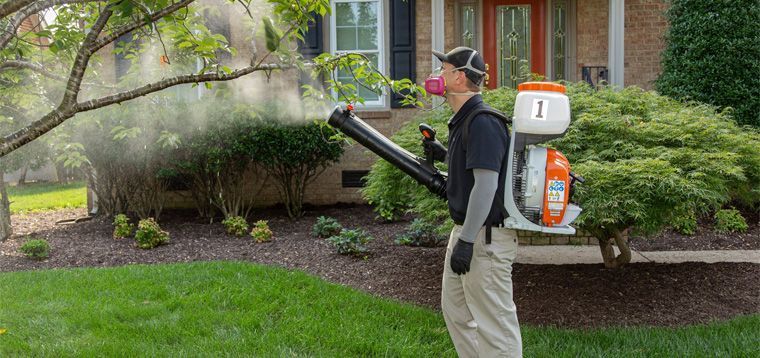
Whether the property sits in Portsmouth or Newport News, an inspection starts the same way, walking the yard, checking gutters and low spots, and looking at shaded areas where adults rest during the day. From there, technicians treat both the resting spots and any actual breeding sites found on the property.
Properties near the Elizabeth River, Paradise Creek, the James River, or Newport News Park tend to benefit from combined barrier spray and larvicide treatment, since there's usually more unavoidable standing water nearby than a barrier spray alone fully addresses. Homeowners further from these water sources may do fine with a more standard seasonal approach. Some folks in the area also search mosquito control virginia beach va when comparing service across cities, and the same logic on water proximity applies no matter which specific search brought someone to this page.
Monthly treatment running April through October covers the active season for both cities. Given how much water both Portsmouth and Newport News sit near, cutting service short before October often means missing the tail end of the season when late rain can still keep populations elevated.
Do Portsmouth and Newport News need the same treatment schedule?
Pretty much, yes. Both cities run on the same April through October season common across Hampton Roads, though properties closest to the water in either city often need more thorough inspection than one farther inland.
A Detail Worth Knowing for Both Cities
Here's something that trips up homeowners in both places. A yard can look completely dry and still deal with real mosquito pressure if it sits within flying range of a river, creek, or wetland area. Mosquitoes bred in Paradise Creek or Newport News Park don't stay put. They travel into surrounding neighborhoods well past where they hatched, which is why a clean, well kept yard can still feel like it's under siege some evenings.
Between Professional Visits
A handful of habits help stretch treatment further in either city:
- Clear gutters regularly, especially on older Portsmouth homes where aging systems clog faster
- Empty birdbaths, plant saucers, and any standing containers every couple of days
- Trim shrubs and overgrown grass near the house to cut down daytime shade
- Check screens on windows and doors, particularly in homes near the water where humidity wears materials down faster
None of this replaces scheduled professional treatment, but it does help stretch out how long each visit's effects actually last.
Getting Ahead of the Season
Portsmouth and Newport News each have their own water source driving the problem, the Elizabeth River on one side, the James River and Newport News Park on the other, but homeowners end up in a pretty similar spot either way. Getting on a monthly schedule before the season fully kicks in just beats trying to catch up once a yard's already unusable most evenings.
Dealing with a yard that's worse than it should be, or haven't had a proper inspection in a while? Better to start the process now than wait around for August pressure to make that decision for you.