Why Annual Termite Inspections Matter More in Virginia Beach Than Most Homeowners Realize?
Talk to anyone who's owned a home in Hampton Roads for more than a few years and you'll hear some version of the same story. Nobody saw the termites coming. That's kind of the point. A termite inspection virginia beach homeowner books usually isn't a response to something they noticed. It's a decision made before there's anything to notice, and around here, that timing is honestly the whole game.
Ants and roaches give themselves away. You see them, you deal with them. Termites don't work that way. They sit behind walls, under floors, inside crawl spaces, doing damage for months, sometimes years, before anything looks off from where you're standing. By the time it does, the repair bill has usually grown bigger than it needed to. That gap between "nothing looks wrong" and "this is now a real problem" is what a solid termite control virginia beach plan is meant to close.
Why Termites Do So Well in Hampton Roads Homes
Essentially, Virginia Beach provides what subterranean termites look for in abundance. First of all, they need moisture and coastal Virginia has a very humid climate almost year-round and not only during summertime. In case of presence of crawl space, wood sidings, poor drainage, foundation cracks and highly moisture retaining soils, houses become a target for pests.
The thing is that most houses in this region have old wood frame construction and that provides ways for termites' movement unnoticed. Once moisture and easily accessible wood are found by the colony, it takes no time at all for pests to start their underground spread throughout floors and wood frames invisibly.
Inspections around here tend to turn up activity in a handful of predictable places:
- Crawl space support beams
- Floor joists and subfloors
- Foundation gaps
- Wood that's already picked up moisture damage
- Spots where exterior wood touches soil directly
None of this is exotic or rare. It's just where termites end up when the conditions are right, which in this region, they usually are.
The Trouble With Waiting Until You Actually See Something
Many property owners commit one common oversight without knowing it. It is to think that they will be able to detect the problem at the earliest onset. Actually, most termite issues only come to notice after the damage has been done.
A handful of signs tend to show up once a colony has been active for a while:
- Bubbling or peeling paint on walls or trim
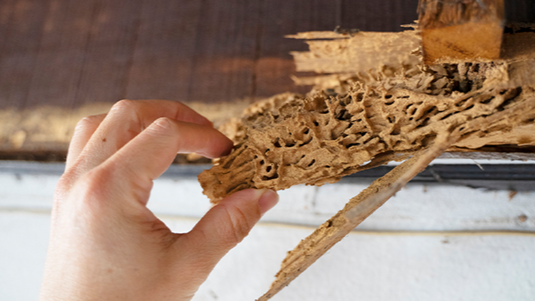
- Soft spots in wood, or wood that sounds hollow when tapped
- Floors that sag slightly in one spot
- Windows or doors that stick for no clear reason
- Mud tubes running along the foundation
- Piles of shed wings near a doorway or windowsill
Any one of these suggests that the termites have done their damage for a long time rather than showing up yesterday. At the point where these signs become apparent, a colony might be well on its way to establishing itself in other parts of the property.
Structural damage tends to hit the parts of a home doing the actual work of holding it up: support beams, band boards, floor systems, crawl space framing. And here's the detail that catches almost everyone off guard the first time they hear it.
Standard homeowners insurance usually does not cover termite damage. That repair bill comes straight out of pocket, which is the real reason prevention matters more than most people assume going in.
What a Real Termite Inspection Actually Looks Like
A proper inspection covers a lot more ground than most people picture in their head. Trained technicians aren't just looking for termites that are already there. They're checking the conditions that make future activity likely in the first place.
What gets checked, and what it's really looking for:
| Area inspected | What technicians are looking for |
|---|---|
| Crawl space and foundation | Mud tubes, moisture buildup, wood-to-soil contact |
| Attic and basement | Damaged wood, droppings, discarded wings |
| Exterior perimeter | Entry points, cracks, standing water near the structure |
| Structural framing | Hollow-sounding wood, soft spots, visible damage |
| Concrete slab joints | Gaps termites can use to move underground into the home |
The goal isn't a quick yes or no on whether termites are present right now. It's catching the stuff that makes a future infestation likely, early enough that it's still cheap and easy to deal with.
Prevention Really Does Cost Less Than Waiting
A lot of people put off termite inspections because they figure prevention is expensive. It's usually the opposite, and it's not close. Preventative coverage runs a fraction of what structural repair costs once a colony has been settled in for a while.
A regular termite renewal program is usually priced starting from about $300 a year in this area. It usually involves monitoring and an annual inspection, along with coverage for any termite treatments, some of which will cover $25,000 worth of damages by termites.
Prevention versus waiting, side by side
| Services | Typical cost |
|---|---|
| Annual termite protection plan | Around $300 per year |
| Damage coverage included | Up to $25,000 |
| Minor structural repair after an infestation | A few thousand dollars |
| Major structural repair (subfloors, support beams) | Can reach the tens of thousands |
Put real numbers side by side like that, and prevention starts looking like the obvious call, not the cautious one.
Homeowners who start searching termite control near me right after spotting a warning sign are usually already past the point where this was cheap to fix. Booking before anything shows up is really the only way to keep the cost on the low end.
Most of This Actually Starts in the Crawl Space
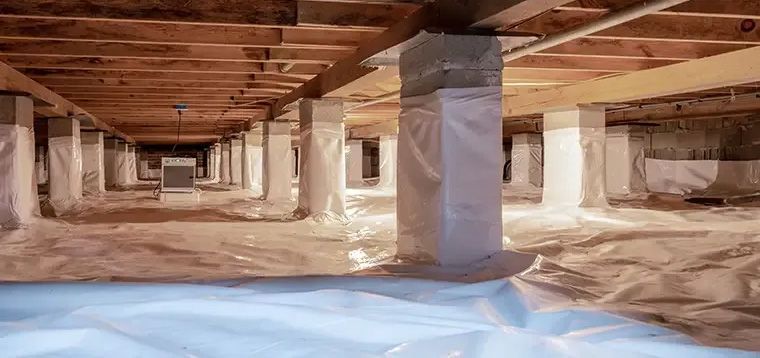
In Hampton Roads, the crawl space plays a bigger role in termite activity than most homeowners give it credit for. Bad ventilation, too much humidity, standing water, wood sitting directly against soil, all of it adds up to close to ideal conditions for termites working underneath a home.
Most people never check their own crawl space. It's hard to get into and easy to forget exists, which is a big part of why moisture and termite activity can sit there undisturbed for a long stretch while support structures underneath the home slowly weaken. Anyone typing termite and moisture inspection near me into a search bar is usually dealing with this exact kind of hidden risk, where the moisture problem and the termite problem turn out to be the same thing wearing two different names.
Fixing crawl space humidity and correcting moisture issues does more to lower long-term termite risk than almost any single thing a homeowner can do on their own, no professional required for that first step.
Local Experience Actually Changes the Outcome Here
Pest control varies from region to region, and this is demonstrated through the existence of different environmental habitats like coasts where homes close to marshlands, waterfronts, and humidity zones face pressure that is not encountered by inland homes.
A termite treatment plan will clearly differ according to the challenges faced, and technicians who have been in the field for many years in places like Virginia Beach, Norfolk, Chesapeake, Hampton, and Suffolk understand this. Seasonal swarm timing. Coastal moisture behavior. Which construction styles in this specific area are the most exposed. None of that comes out of a training manual somewhere. It comes from doing this work on these exact homes, year after year.
That local knowledge shapes timing too. The time for swarms is generally late spring here, shortly following a rainstorm, where the colonies are growing and will most likely leave evidence of this. Booking an inspection prior to this period rather than afterward may seem like a minor choice, but in actuality, it is a very important one.
Annual Inspections Are the Smart Move, Not the Overly Cautious One
Termite control was never meant to be a one-time thing. Activity in coastal Virginia barely slows down through the year, which means ongoing monitoring is what actually keeps a home protected. A single inspection, done once and then forgotten about, doesn't really do that job.
The most expensive termite problems are almost always the ones that got caught too late. An annual inspection gives a homeowner the chance to catch something while it's still small and manageable, long before it turns into a five-figure repair. Whether there's already a reason to be suspicious or it's simply been a year since the last check, booking now is still the cheapest option sitting on the table.
If it's been more than a year since the last professional look at your crawl space and foundation, that alone is usually reason enough to schedule one.